It has come to the end of the year, what feels like a very quick year, and a lot has been learnt in this time. Lots of fun and lots of hard work!
I would say that the main thing I have learned from the filming experience especially during the group project was that there is so much more paper work to be done, you cant just go out and film. From permission to film to release forms there are many things to complete to do a project!
I have also learned that time management is essential, if you don't assign and plan when you are going to achieve something by, chances are you wont get it done on time and before you know it, it is a week before the deadline and there is still tonnes of work to do!
My favourite "day" project from the year has to be this one:
OH MY GOD! from James Harris on Vimeo.
Not only did it make for an entertaining mini project but it also involved working in quite a large group and making creative decisions all together!
The one thing I would change about my year was to re-do my individual project as technically it was not my best piece and if it were for a few checked camera settings the whole thing would have turned out far better.
Thank you everyone for a great year :) bring on the next one!
Showing posts with label 4003. Show all posts
Showing posts with label 4003. Show all posts
Tuesday, 18 May 2010

Tuesday, 4 May 2010
Group Project: The Man Behind The Music

After starting the project almost 4 months ago, the time spent with Ed and Mike working on the ACM Gospel Choir Documentary now known as The Man Behind The Music has come to an end! A copy of the final piece will be posted shortly!
Overall I am really happy with the film we have managed to make, we went out filming with a certain aim and during editing I think the way we had intended to tell a story was lost slightly and not all of our original ideas were met but what we have ended up with is still a good, informative, entertaining piece.

For example, we had aimed for an equilibrium-disequilibrium-equilibrium type of narrative through Marks interview bringing up many struggles and how he overcame them, this was lost in the editing process due to the sheer length and usefulness of everything he said.
The one thing I would criticise about the piece is that from the way we filmed the interview does begin to get a bit boring to look at after a while (but maybe that's just because I have watched it about 100 times!) and if we hadn't lost that first tape Ed had filmed we would have had more useful cut aways.

The other thing that is a shame is we could not find a way to include the interview with the 2 choir members Emily and Ricky, although we have made sure they are included in the out takes.
The background music used throughout the interview really compliments it well I feel as we have used mellow/sad sounding music when he is talking seriously and/or negatively and have used really upbeat songs in other places particularly when it breaks into the credits at the end I feel it works really well!

If I were to do this project again I would have made sure that Marks interview audio was recorded at a higher quality and also that we hadn't for one reason or another lost a whole tapes worth of really good footage! I think considering the technical difficulties we had which did lose us a lot of time we did still make a really good film which will hopefully be liked by all those who watch it and also all those involved in the The Man Behind The Music. =]
Using iDVD

The final part of the group project was to make a DVD to hand it in on and present. We chose to use iDVD as it is simpler to use than other software but still give you a professional looking DVD.

We kept the theme that we had used within the film of the ACM colours and used moving images of them on the home screen.
As we had a outtakes section we made an extras section and so the DVD map looks something like this:

I really like our layout as we have personalised it to keep it in tone with the film and it doesn't look like one of the pre-loaded themes within the programme.
Tuesday, 27 April 2010
Group Project: Reassessing Our Approach

So with only a week to go before the deadline for our group project we are deep into the editing process. Due to problems with technology and capturing our 2nd tape of footage we only managed to gather all our footage together on Friday.
Up to this point we had edited the interview footage from just one tape and were finding it impossible to match up the cut down clips with this new tape. What else could we do but start over?
We managed to line up the two full half an hour tapes of interview so we could easily cut down and swap between shots. Though this sounds like a massive step back, because I had worked on the interview so far for so long I knew exactly what was and wasn't in it. It only took a few hours to get back to a interview of just over 6 minutes.
To cut a long story short...after a minor delay we are back on track and feel we are still on track to get everything done on time!
And the lesson to be learnt? ... dont rely on technology!
Wednesday, 24 March 2010
Group Project: Progress Update

We are deep in the depths of editing now and have been spending lots of extra time in the Gatehouse working through our footage trying to edit it down into something that resembles a structured documentary.
 We have divided the roles of editing up between the three of us, I have been looking at what we have filmed and looking at editing Marks interview footage whilst Ed and Mike have been looking at the archive BBC footage from the DVD's Ed was given a while ago.
I have been able to take the half an hours worth of footage with Mark down to around 10 minutes and after ruthlessly going through what he has said and structuring the narrative we want to end up with we are aiming to edit this down even further to around 5 mins. This will allow plenty of leeway to add other footage.
Over Easter we are hoping to film a rehearsal with the choir but with only 2 days left and other commitments with the other 2 modules, this is about where we leave it for this term. We are well on our way to having a finished product as we have structured our narrative, have near to all of our required footage and a strong idea of how we want to styleise the documentary :)
See you after Easter!
Wednesday, 17 March 2010
Group Project: Team Progress

So after last weeks filming we are left with over 2 hours of footage and the 'what next?' scenario...
We have managed to log and capture one and a half of our tapes (can never rely on technology!) and now we have to figure out what to do with the stuff we have.
Our approach now is to cut down the footage we have, we are going to take the half an hour or so interview down into somehting around 6 minutes worth of narrative. The logic behind this is that if we can structure Marks interview into around 6 minutes it gives 2 minutes either side to add or take away other footage.
This is our aim to be done by the easter holidays so that we have the main body of the documentary done. We are going to have one more filming session and then we have archive footage to encorporate in with what we already have.
Thursday, 11 March 2010
Action!
On Monday we set out to do the main bulk of our filming for our group project. This is the story of our day filming...

We set off first thing in the morning and headed down the M4 to meet Ed at his house and head into Guildford and to ACM. After a quick cuppa and meeting Ed's dog we jumped into the car and made our way to ACM.
This is where we encountered our first problem, the woman who was meant to give us permission to film was ill. This meant we could still film but we couldn't get any of the exterior shots or anything containing logo's or much of the interior. We were allowed in a rehearsal room though which was where we spent some time filming 2 members of the choir Ricky and Emily.
 We got some footage of them rehearsing a duet they had been working on which will be useful when it comes to reflecting on the choir members, this took quite some time and we probably wont end up using much of it but it does make good footage. The 2nd part of our time with them was an interview with them focusing on similar questions that we had written to ask music director Mark, this will prove more useful as we can use soundbites of their interview.
After this we headed over to Croydon to Mark's house, we chose to film here rather at ACM as it gives a more personal up close approach to the interview and being that the documentary is effectively his story we though it would be better. As it turned out his living room was all neutral colours and had good lighting which made a very good 'studio' for the filming.
 During filming we had 2 cameras and one tripod. The way we set this up was to have one static camera, and one camera moving and changing angles to provide what we hope will make 'arty' shots for the interview sections. If we were to do it again we definitely would take a boom microphone to get better quality audio from the interviews to use as narration.
Though it may not seem like we did much we got a lot of useful footage and it is most of our filming done. Ed will go back in the next couple of weeks to film a quick few exterior shots, and we are hoping that the footage Ed took before will show up after being deleted off the computers.

On top of this we have plenty of archive footage to work with which will probably be included in the opening section of the documentary.
Though it was a long day filled with service station food and rush hour London traffic it was a very productive, useful and fun day!

We set off first thing in the morning and headed down the M4 to meet Ed at his house and head into Guildford and to ACM. After a quick cuppa and meeting Ed's dog we jumped into the car and made our way to ACM.
This is where we encountered our first problem, the woman who was meant to give us permission to film was ill. This meant we could still film but we couldn't get any of the exterior shots or anything containing logo's or much of the interior. We were allowed in a rehearsal room though which was where we spent some time filming 2 members of the choir Ricky and Emily.

After this we headed over to Croydon to Mark's house, we chose to film here rather at ACM as it gives a more personal up close approach to the interview and being that the documentary is effectively his story we though it would be better. As it turned out his living room was all neutral colours and had good lighting which made a very good 'studio' for the filming.
 During filming we had 2 cameras and one tripod. The way we set this up was to have one static camera, and one camera moving and changing angles to provide what we hope will make 'arty' shots for the interview sections. If we were to do it again we definitely would take a boom microphone to get better quality audio from the interviews to use as narration.
Though it may not seem like we did much we got a lot of useful footage and it is most of our filming done. Ed will go back in the next couple of weeks to film a quick few exterior shots, and we are hoping that the footage Ed took before will show up after being deleted off the computers.

On top of this we have plenty of archive footage to work with which will probably be included in the opening section of the documentary.
Though it was a long day filled with service station food and rush hour London traffic it was a very productive, useful and fun day!
Wednesday, 3 March 2010
Music Interview Research
Due to the unavailability of most of the members of ACM Gospel Choir we have had to push back our filming by one week. Though this in one respect is a pain, I feel it has given us more time to prepare for the interview with the Music Director Mark de Lisser, as it is the main spine of our documentary I am quite happy that we have been given more time to prepare for it.
We have the interview question pretty much sorted but it is the style of filming the interview that I feel needs more thought. For this I have been looking into existing examples of music based interviews.
The key thing I take from this interview with Paramore is that it looks like there is no one there asking the questions, it is the answers given by the band that form a the narrative of the feature.I like the camera style used on 4music, part of Channel 4 in particular their use of close up camera shots as it makes them seem more personal. I feel this is something we should aim to recreate in our filming. The intercutting of the interview with performance footage also reinforces the message that it is all about the music.
This second interview with Placebo (starting at 3.50) takes the one on one format but also has some interesting shots it is worth taking note of. The one thing I feel about this interview that would be hard to carry out ourselves but would be impressive if done properly is the fact that the camera is always moving, giving us constantly different angles of the interviewer and interviewee. This interview differs from the first also in that there is no background music so there is less distraction from Brian Molko's answers.
This third interview with Kings of Leon from the BBC at Glastonbury Festival has a more basic set up and is not set in studio has a more amateur look, only using one camera is still very personal in the way that the footage looks like something any one of us could film yet it is people we potentially idolise being filmed. The basic nature of the shot types and framing is something we can take note from when following choir members around and capturing impromptu footage.
We have the interview question pretty much sorted but it is the style of filming the interview that I feel needs more thought. For this I have been looking into existing examples of music based interviews.
The key thing I take from this interview with Paramore is that it looks like there is no one there asking the questions, it is the answers given by the band that form a the narrative of the feature.I like the camera style used on 4music, part of Channel 4 in particular their use of close up camera shots as it makes them seem more personal. I feel this is something we should aim to recreate in our filming. The intercutting of the interview with performance footage also reinforces the message that it is all about the music.
This second interview with Placebo (starting at 3.50) takes the one on one format but also has some interesting shots it is worth taking note of. The one thing I feel about this interview that would be hard to carry out ourselves but would be impressive if done properly is the fact that the camera is always moving, giving us constantly different angles of the interviewer and interviewee. This interview differs from the first also in that there is no background music so there is less distraction from Brian Molko's answers.
This third interview with Kings of Leon from the BBC at Glastonbury Festival has a more basic set up and is not set in studio has a more amateur look, only using one camera is still very personal in the way that the footage looks like something any one of us could film yet it is people we potentially idolise being filmed. The basic nature of the shot types and framing is something we can take note from when following choir members around and capturing impromptu footage.
Tuesday, 2 March 2010
Scriptwriting

There are many formatting basics when it comes to script writing, for example all scripts are written in with the same layouts using the same size font. From this rule it makes it easy to estimate how long the final film will be, it is a vague rule that each page will equal one page of action.
This is not a strict rule as for example the Avatar script is around 150 pages long but is longer than 150mins.
Other basic key rules about script formatting:
- Character cues in the middle of page in capital letters
- Info in brackets gives more personal direction to characters
- Column dialogue when more than one character speaks at once
- If listing a series of visual shots, number then describe
- Font= Courier 12pt
- DON'T number scenes
- Title scenes: INT/EXT, Location, Time of Day

From this:

To this:

Instantly the script becomes far easier to read and easy to distinguish between action, dialogue, screen directions etc.
The guide we looked at about scriptwriting written for BBC website can be previewed/downloaded here.
Tuesday, 23 February 2010
Group Project: Progress
We are at the point now where we feel ready to film the main bulk of our footage, Ed has already filmed some research footage which has infact turned out to be quite useful and I'm sure we will make use of it in our final edit.
Monday should be the grand day of filming in which we need to acheive 3 things: the interview, the singing and the mini interviews with choir. To do this we will have a Sony Z1 camera, and at least one Panasonic camera.

Before Monday we need to research techniques behind filming music (specifically choirs), sort out our travel arrangements and make sure we have scripted enough interview questions in order to cover everything we have been planning for the last few weeks.

In the mean time we have come up with what we want to include in the content of our film and an outline of the structure:
Scenes to include:
- Mark de Lisser interview - split into 2/3 sections
- Mini interviews with choir members - Interspersed
- Rehearsal footage
- Performance footage
- BBC Archive footage
- Why you started choir?
- What you ask from members?
- What message you have?
- Any difficultly/struggles and how you have overcome them?
- What is the future?
Act One
- Archive
- Past Tense/establishing interview Q's
- Intro to choir and location
- Intro to some elements of conflict/struggle
- Interview Q's with Mark about personal life
- Quotes from members about struggles/other commitments
- Some rehearsal footage
- Looking to future
- Message of ACM
- Reflection on successes
- Summary interview Q's
- "Live" footage
Soundtrack Pro

Soundtrack Pro is part of the Apple software package and is used for editing and mixing with multi-track audio. It has an extensive bank of sound effects and audio files, and is compatable with most audio file types.
The reason we are using this software at the moment is to edit sound to a muted film clip from City of God. Soundtrack Pro allows you to view the movie file at the same time as editing audio which makes it a lot easier to get precise hit points for the sound effects.

This is an example of someone else's work of how useful Soundtrack Pro is for post production sound editing. One of the key advantages of using Soundtrack Pro is the ability to multitrack which is not as easy to do in Final Cut Pro, and you can line up the sounds as closely as by frame (simply by adjusting snap value).
Tuesday, 9 February 2010
Step Outlines

In todays session we focused mainly on short films and how to construct them, mainly focusing on scripting and story boarding.
The excercise we completed was on taking a script for a short film and turning it into a step outline. The purpose of a step outline is to condense a script into a series of statements/statuses about each scene. In this case we had 10 scenes to break down into basic one sentence summaries.
It makes it an easy way to describe the film to some one without them having to read the entire script.
The basic things to include in the step outline is location and action. What should not be included is: dialogue, character description and reason for scene.
The original script looks something like this:

Converting this into a step outline would be more concise:

Friday, 5 February 2010
Continuity of Filming Project
Following last weeks session looking at the 180 degree rule and continuity of filming, at the end of the session we went out and filmed some footage making sure we filmed with our actor going right to left.
We were given a list of shots to create which followed the story of a man receiving a phone call with some bad news then rushing to the source of the call. Using Ed as our actor we created the following short film:
When it came to filming we always had to remember when setting up each shot from which angle we needed it in order to keep the shots flowing and not to confuse the audience. Our team managed to remember this rule the whole way through and there was no need for any double takes.
In todays session we worked with another group who were working left to right and put our footage together, this created more of a story. This was the final result:
As the original separate films were recorded separately the use of locations overlaps and does at points look a little odd but considering it is only a small exercise it is not too much of an issue and is more just for our own practice.
We were given a list of shots to create which followed the story of a man receiving a phone call with some bad news then rushing to the source of the call. Using Ed as our actor we created the following short film:
When it came to filming we always had to remember when setting up each shot from which angle we needed it in order to keep the shots flowing and not to confuse the audience. Our team managed to remember this rule the whole way through and there was no need for any double takes.
In todays session we worked with another group who were working left to right and put our footage together, this created more of a story. This was the final result:
As the original separate films were recorded separately the use of locations overlaps and does at points look a little odd but considering it is only a small exercise it is not too much of an issue and is more just for our own practice.
Group Project: ACM Gospel Documentary
Research
I have been looking at videos from the BBC's Page on ACM Gospel Choir for further research. The one which I found particularly useful was the one about Music Director Mark De Lisser, this is more of a profile video on him and proves useful as it is pretty much a short excerpt of the type of thing we hope to make.
In terms of other research, Ed conducted a phone interview with Mark and found out his vision and views on the choir, this has given us some basic material to use in order to start thinking about structuring an interview for the documentary.
Pitch
On Tuesday we took our pitches for our projects over to Paintworks in Bristol which is where we will be based in the 3rd year. As Ed was filming with the choir it was up to Mike and myself to represent the team! For our presentation we created a Google Doc as it made it easy for us all to edit it in our own time in separate locations. We saved it to a memory stick as a back up (though the YouTube video would not have worked in this case), however the good thing about Google Doc is that you don't need to rely on them and all you need is the internet access to get to your file.
This is the presentation we created:
I have been looking at videos from the BBC's Page on ACM Gospel Choir for further research. The one which I found particularly useful was the one about Music Director Mark De Lisser, this is more of a profile video on him and proves useful as it is pretty much a short excerpt of the type of thing we hope to make.
In terms of other research, Ed conducted a phone interview with Mark and found out his vision and views on the choir, this has given us some basic material to use in order to start thinking about structuring an interview for the documentary.
Pitch
This is the presentation we created:
Friday, 22 January 2010
Group Project: Initial Ideas

We are staring work on our group video project and our task by the end of the day was to come up with an idea, find groups and submit a proposal.
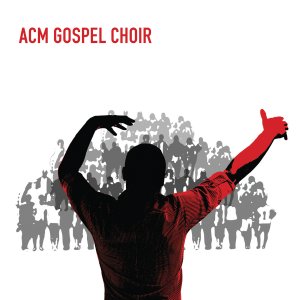
I have chosen to work with Ed and Mike, Ed had the idea of doing a documentary on the choir he is in called ACM Gospel Choir. I myself wanted to do something either documentary or music based so this idea really appealed to me. Here is our treatment so you can get an idea of what we hope to work on:
We intend to make a documentary following the progress of the ACM Gospel Choir. To Tell the story we will have one on one interviews as well as live footage of the choir, to show the progress we will also contrast the footage by using some archive material and some from BBC.
Though we will not neccessarily have one story running throughout, the choir itself are the spine of the documentary and the use of a voiceover will also help hold the piece together.
the ACM Choir are based in Guilford, Surrey and rehearse and perform regularly including featuring on BBC One#s Last Choir Standing in Summer 2008. Their development has been quite rapid and this is what we aim to give an insight on within the documentary.
Another aspect we will focus on is to look at particular members of the choir who have their own side projects, this will also give an insight on the struggle to become professional, successful musicians.
We will go to Guilford to film rehearsal process and also go to one or more of their gigs to get a good range of footage. In terms of how we film it we will use traditional documentary style filming but will also include some backstage hand held camera footage to add a personal touch (in the form of video diary) as well as contrast.
For more info on our chosen topic please visit the ACM website.
Tuesday, 19 January 2010
Scheduling

In todays session we looked further at pre-production and looked at creating a schedule. The function of the schedule is for it to be a document that all crew and cast can read and immediately understand what is going on with shooting.
Key details to be included on a schedule are:
- Contact details of cast/crew (name, phone number, email address)
- Local contacts (can be used as tick list for release forms)
- Equipment details (and contact for technical support)
- Directions/map with transport arrangements (cast often has transport organised for them whereas crew are expected to make their own way)
- Arrival times
- Shooting schedule (in as much or as little detail as you feel appropriate.
Tuesday, 12 January 2010
Using Celtx

In today's session we used Celtx in order to create a storyboard to use for shooting. The new 2.7 version of the free software allows you to use a sketch feature which helps those who cant draw to well.

Using the sketch feature we created overhead shots for a made up script. The advantage of this is that you can make clear pictures of the set that any member of crew would find easy to follow. You can add as much or as little text detail as you wish.
At the end of the 2 scene worth of inputting you get something like this:

From this you can also add images from a camera, which we went on to do. Once you have done this the play function will work and you have a full detailed storyboard which can also be rearranged to function as a shot list.

Tuesday, 8 December 2009
Radio Production Progress: Final Piece!

Today is the hand in date for the Group Radio Project! Our radio as you have read on previous blog entries was about Banksy, we included and introduction/history, interview and finished with a concluding section. The music we used was Teardrop by Massive Attack.

Here is the link to download the original WAV file
In comparison to professional pieces, I think it is clearer that we recorded in different locations as the same voice sounds different. The other thing that could be better about ours is the levels, as at points the music drowns the voice.
Other than that I am really happy with our piece, especially in terms of content. I think we chose an interesting subject and conveyed it in a manner that appeals to young people who would listen to student radio.
Friday, 4 December 2009
Radio Production Progress: Final Editing
Today we completed our editing of One Nation Under Art: Banksy!

After using the Automation tool on Logic Pro, we Merged our audio tracks down to one track and exported it as a WAV file.

Happy days!
The only thing we have left to do now is submit the file for assessment by Tuesday =]

After using the Automation tool on Logic Pro, we Merged our audio tracks down to one track and exported it as a WAV file.

The only thing we have left to do now is submit the file for assessment by Tuesday =]
Monday, 30 November 2009
Radio Production Progress: Editing Session

Monday 30th November
Today we met up in the Gatehouse and assigned ourselves sections of our recordings to edit. I took the Introduction and Conclusion, Carlina looked at the History/Bio Section and Ant has started work on the Interview section.
We have each worked through and basically edited our sections for breaths, pops and any slip ups.
Our next stage is to piece all of the pieces together and set the levels with the backing track.
 As an extra play around I took a piece of recording Carlina did of the phrase "One Nation Under Art" and put it through various filters to try and add something to our current jingle. We did not end up using it as it sounded too much "like a Dalek" but it gave me a chance to have a go with the different filters and how they affect audio.
I applied distortion, modulation and pitch shift but the final product wasn't really fitting with the ambiance of the rest of our radio piece.
Subscribe to:
Posts (Atom)